
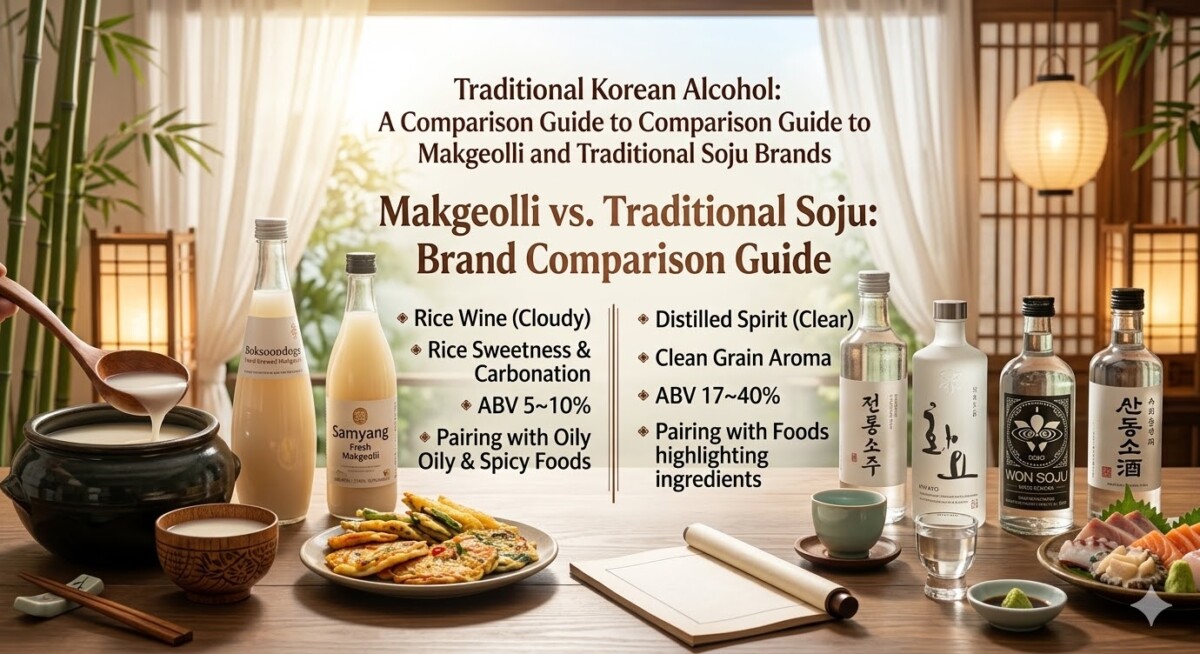
The charm of “K-Traditional Alcohol” is something special these days, isn’t it? Breaking the stereotype of being just ‘drinks for the older generation,’ it has now become the star of hip bars and trendy home-drinking tables.
Today, we’re diving into the allure of the two pillars of traditional liquor—Makgeolli and Traditional Soju—and summarizing a brand comparison guide for beginners in a blog format.
🍶 The Creamy Temptation: Makgeolli
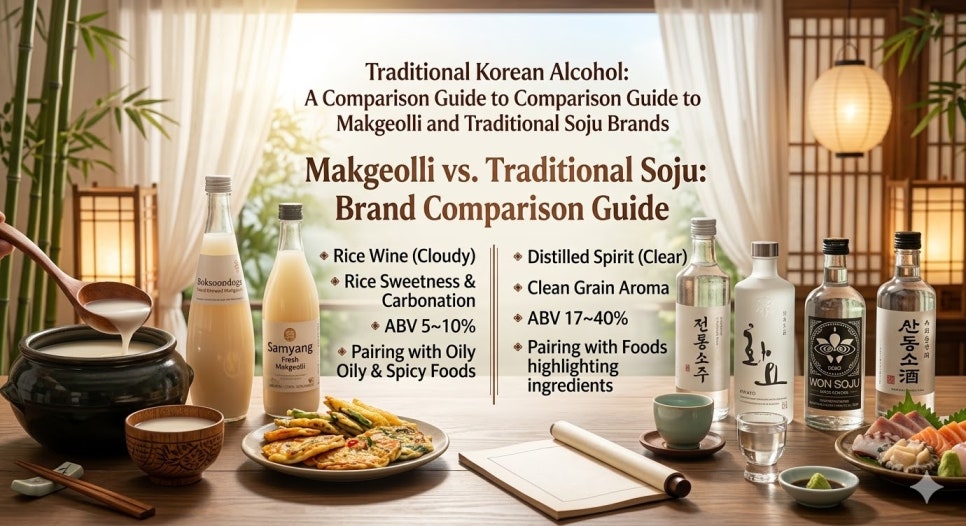
Makgeolli is brewed from rice and nuruk (a traditional fermentation starter), then coarsely strained without refining. With its low alcohol content and rich nutrients, it’s often called “living liquor.”
🏆 Recommended Brand Comparison
| Brand | Features | Recommended for… |
| Boksoonodoga Hand-brewed Makgeolli | Known as ‘Champagne Makgeolli.’ Features intense natural carbonation and refreshing acidity. | Those looking for a party vibe. |
| Haechang Makgeolli | Thick texture and heavy body. Maximizes the sweetness of rice without artificial sweeteners. | Foodies who want to taste the true essence of rice. |
| Naru Fresh Makgeolli | A modern makgeolli made with Seoul Gyeongbokgung rice. Features a clean and smooth finish. | Beginners who dislike the typical grittiness of makgeolli. |
💡 One-liner: Makgeolli is like an edible piece of art, carrying the unique personality of each brewery within a friendly, yogurt-like familiarity.
🔥 Transparent Passion: Traditional Soju
The green-bottle soju we commonly drink is ‘diluted soju.’ In contrast, Traditional Soju is ‘distilled soju’ made by distilling fermented liquor, preserving the deep flavor of its raw ingredients.
🏆 Recommended Brand Comparison
| Brand | Features | Recommended for… |
| Hwayo | The most popular premium soju. Clay pot aging removes impurities for a clean finish. | Those who enjoy highballs or a clean taste. |
| Won Soju | Made using vacuum distillation, resulting in an incredibly smooth throat-hit and subtle grain aroma. | Those who prefer a trendy vibe and a gentle ABV. |
| Andong Soju (Master) | Adheres to traditional atmospheric distillation, offering a strong kick and very rich aroma. | Those who want an authentic, heavy soju with high ABV (45%). |
💡 One-liner: Traditional Soju is a noble essence created by time and distillation technology, much like Whiskey or Brandy.
🆚 Makgeolli vs. Traditional Soju: At a Glance
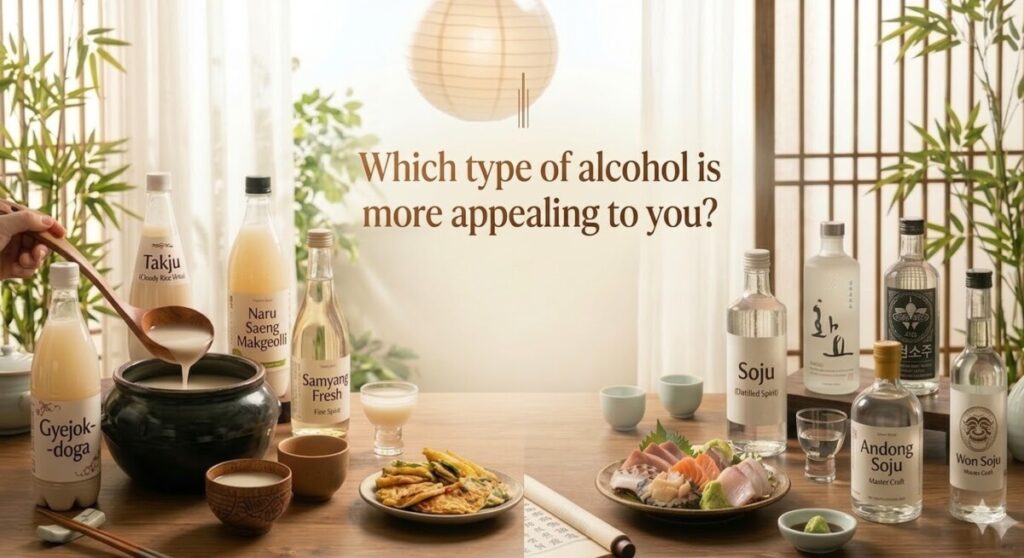
Having trouble deciding? Here’s a quick summary!
- ABV: Makgeolli (5∼12%) < Traditional Soju (17∼53%)
- Food Pairings:
- Makgeolli: Jeon (savory pancakes), acorn jelly, spicy stir-fried pork (oily or spicy foods).
- Traditional Soju: Sashimi, grilled beef, clear soups (foods that highlight the raw ingredients).
- Storage: Makgeolli should be consumed quickly (10-30 days for fresh versions), while Soju can be stored for a long time without worrying about expiration.
🥂 Closing Thoughts
Traditional alcohol is not just a drink to get drunk; it’s about drinking the time and sincerity infused within it. This weekend, how about a bottle of traditional liquor tailored to your taste instead of the usual supermarket beer?